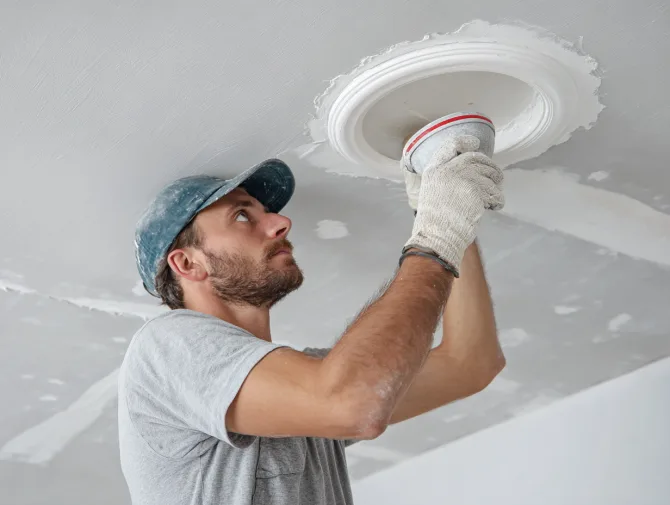
Each ceiling project begins with one clear goal. What exactly do you want gone? And how is it reaching you? Below are the main service routes we rely on, so you can picture what's going on above the finished drywall.
Airborne Noise Control
Airborne noise is quietly relentless. It may never register as “loud,” but it doesn't let up. You make out words. You can name the playlist. It grabs your attention no matter how hard you tune it out. Here, soundproofing ceiling systems usually lean on mass and damping. Heavy layers stop more energy, and damping compound between layers keeps the ceiling from acting like a giant speaker cone.
Sealing gets just as much attention. Tiny gaps at recessed cans, along the perimeter, and around pipes let through more sound than you'd expect. Ignore them, and even top-tier materials underdeliver.
Impact Noise Reduction
Ask anyone in a Mid-City apartment about impact noise and you'll get a groan. Stomping. Heel strikes. Chairs scraping. Because this energy rides the framing rather than just the air, a single added layer of drywall rarely helps much. Serious reduction calls for decoupling — physically separating your ceiling so vibration struggles to get across.
Even a well-designed system won't turn an active household upstairs into silence. What it can do is take the edge off. Noise that felt like an attack starts to feel far away. On soundproofing ceiling apartment projects, that shift is everything — it's the difference between “I have to move” and “I can finally relax at home.”
High-Performance Materials & Assemblies
No single product does the trick. Results come from a proven assembly — mass loaded vinyl, damping compound sandwiched between layers, isolation hardware that interrupts vibration. The exact build is driven by your building and its constraints. Ceiling height counts. Light placement counts. So does access to ductwork and sprinkler lines.
We also run the numbers on weight and support; some ceilings can't carry an extra load unless it's planned carefully. Shopping acoustical ceiling contractors? Lean toward the ones who discuss framing and fasteners rather than simply “adding a layer.” Performance is built there.
Drop Ceiling Soundproofing
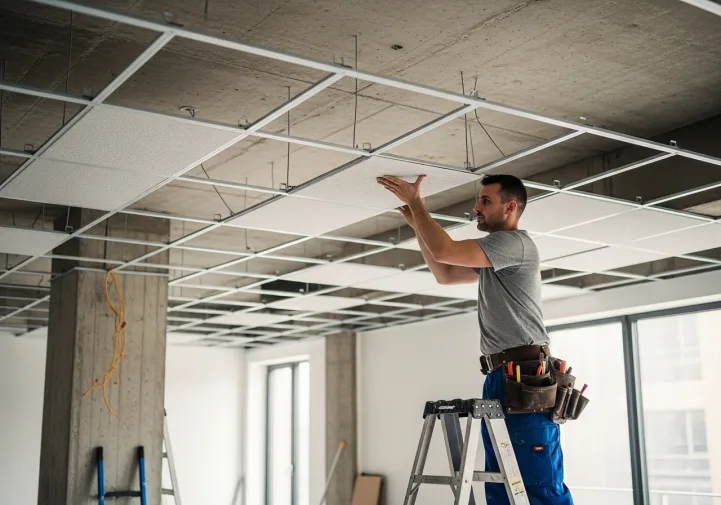
A drop ceiling — common in the creative offices along Colorado Avenue and in converted retail spaces — can work in your favor when it's built properly. The cavity above the grid is already there, and that space can help control noise. The error is treating it as decoration. A loose grid, flimsy tiles, or open gaps let sound straight through, and the room stays loud. The cure is usually upgrading the whole system, not replacing one tile.
People who phone acoustic ceiling installation contractors are usually after three things: a tidy look, easy access to utilities, and noise that actually drops in daily life.
A drop ceiling design might combine denser tiles, extra mass laid above the grid, and targeted absorption in the plenum. After that we seal the perimeter and every penetration. That final step is critical, since any path for air is a path for sound.