TAMING NOISE AND REVERBERATION IN YOUR RESTAURANT
Restaurant noise has two sources, and each takes a different fix: reverberation building inside the dining room, and sound transmitted from the kitchen, the bar, or the street outside. In most dining rooms, reverberation does more damage.
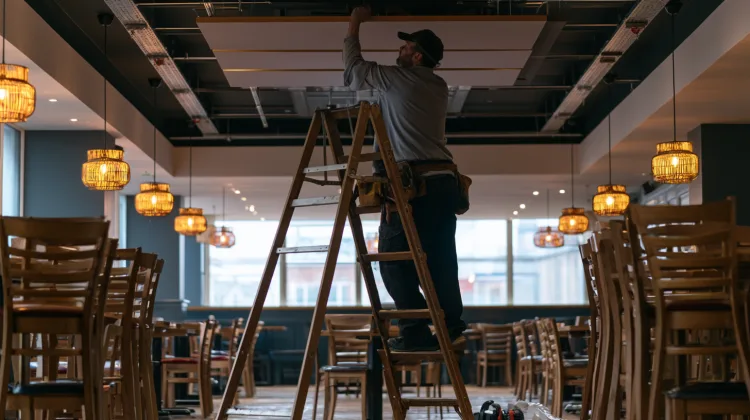
Hard surfaces drive reverberation. Concrete, open ceilings, big windows, and tile — the look of many Main Street spots — bounce sound back rather than absorbing it, so voices and clatter keep piling on.
For easy conversation, a restaurant should sit at roughly 60 to 70 dB. A busy, hard-surfaced room regularly hits 80 to 100 dB or higher — people raise their voices, and the room climbs higher again.
Too much noise hurts the bottom line. It ranks high among diners' review complaints, it shortens visits, and it makes talking harder for guests and staff — and revenue feels all of it.