Santa Monica & Greater LA Service - We Ship Anywhere in the U.S.

FLOOR SOUNDPROOFING

Floor soundproofing cuts the noise passing between stacked spaces — a condo over another condo, an ADU built above a garage — using mass, decoupling, and resilient layers. Two problems are in play: impact noise (footsteps, dropped keys) and airborne noise (voices, TV) coming from the floor above or below.

Each type is rated on its own scale and needs its own treatment, which is why one product almost never fixes a floor noise problem by itself.

A List of Our Services

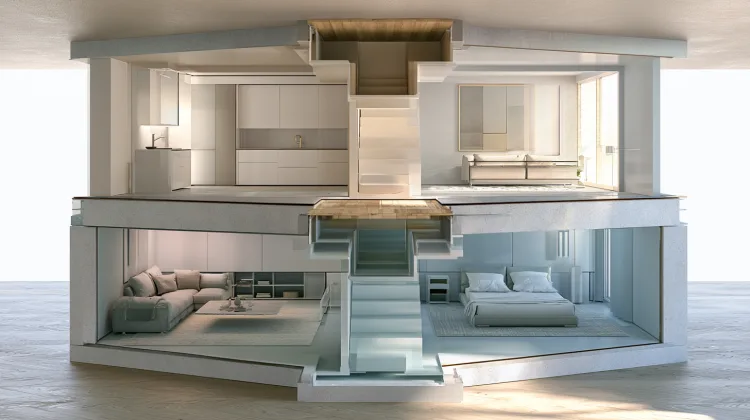
Cross-section of two stacked rooms divided by a floor-ceiling assembly

BLOCK IMPACT AND AIRBORNE NOISE BETWEEN FLOORS

Floor noise shows up in two forms that need different fixes: impact noise from something hitting the floor, and airborne noise, which rides through the floor-ceiling assembly on sound waves.

Impact noise drives most calls. Footsteps, a book hitting the floor, a dog racing down the hall — each sends vibration into the structure, and it returns as sound below.

Airborne noise is the other half. Talking, music, and television send sound waves hunting for gaps and thin sections in the floor-ceiling assembly, and they carry through to the next level.

Solving one type won't automatically solve the other. A floor upgraded to stop footsteps can still let voices through, because impact and airborne noise take different routes through the assembly.
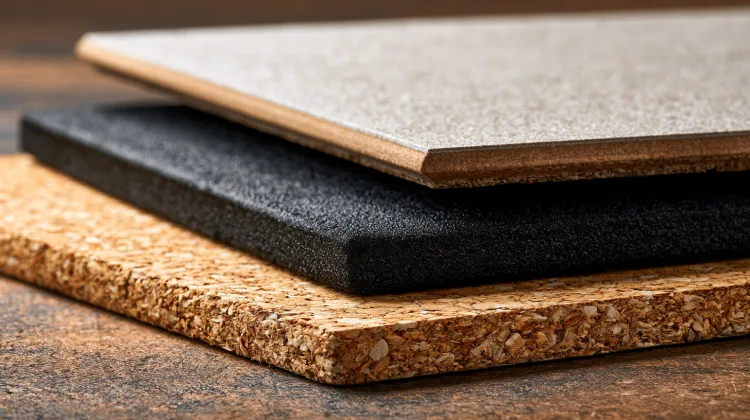
Samples of cork, rubber, and mass-loaded underlayment stacked in layers

HOW FLOOR SOUNDPROOFING ACTUALLY WORKS

A floor passes two kinds of noise, and each gets its own rating — knowing which is which is the starting point for soundproofing a floor the right way. Impact Insulation Class (IIC) grades impact noise, Sound Transmission Class (STC) grades airborne noise, and on both scales a higher number is better.

Impact control depends on resilience and decoupling. A springy underlayment or floated floor holds your walking surface off the structure and absorbs vibration before the assembly underneath picks it up.

Airborne control depends on mass and airtightness. Heavy layers in the assembly and sealed gaps block the sound waves that light, leaky sections of the floor-ceiling structure would otherwise let through.

Acoustic underlayment — what most flooring stores call “floor soundproofing” — mostly helps with impact noise under a floating floor. It does little against airborne sound and only trims heavy impact noise, so underlayment by itself often disappoints.

You can work from below. If the finished floor has to stay, like oak in a North of Montana home, decoupling the ceiling of the room underneath and adding mass reduces impact and airborne noise reaching that room.

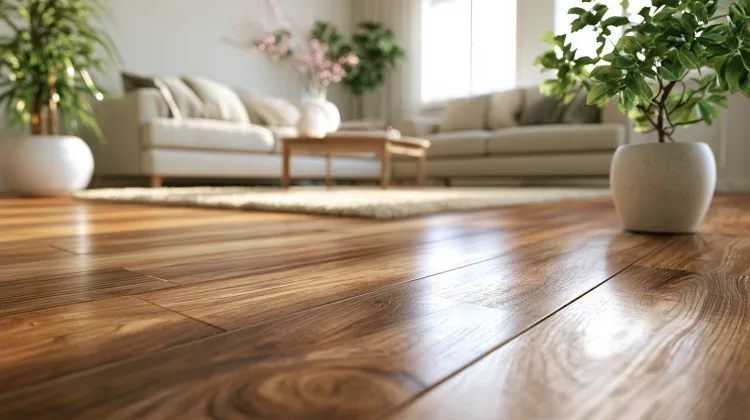
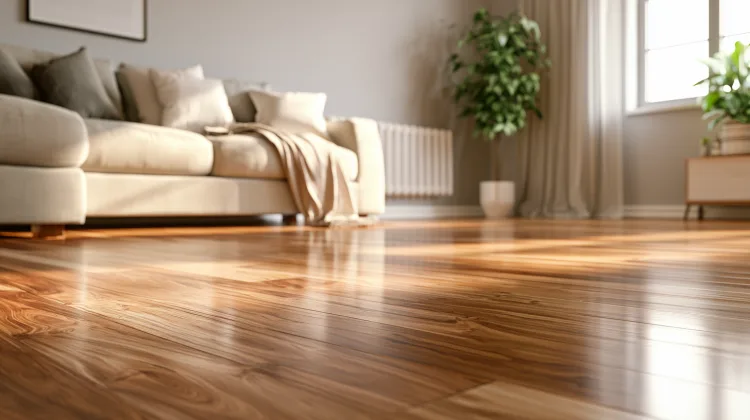
Hardwood floor in a quiet living room lit by soft afternoon light

FLOOR SOUNDPROOFING SERVICES WE OFFER

Our floor soundproofing services handle impact and airborne noise and work on the assembly from above or below, whichever side we can reach. Every service listed here goes after a particular floor noise problem.

Acoustic Underlayment and Floating Floor Systems

Underlayment and floating floor systems put a resilient layer between your finished flooring and the subfloor, which lowers impact noise. The assembly's IIC goes up, so footsteps and other contact sounds reach the room below with far less force.

Floor Decoupling and Mass Buildup

Working from the top, decoupling plus a mass buildup addresses impact and airborne noise together. A resilient mat under a dense mass layer floats the finished floor off the structure and stops airborne sound a plain underlayment would let pass.

Ceiling Soundproofing from Below

Ceiling soundproofing from below comes in when the finished floor can't be pulled up or changed. The lower room's ceiling is decoupled on resilient channels or isolation clips, added mass does the rest, and impact and airborne noise into that room both drop. See our ceiling soundproofing page.

Impact Noise Control for Apartments and Condos

Footsteps between stacked units are the biggest complaint in apartments and condos, from Venice to Sunset Park. Our impact noise control pairs resilient isolation with mass, meets building and HOA requirements, and cuts what passes between neighbors.

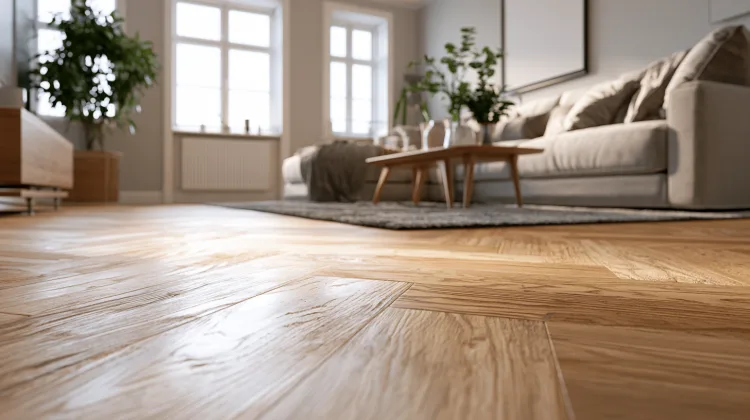
Polished hardwood floor in a sunny, peaceful living room

WHAT SETS OUR FLOOR SOUNDPROOFING COMPANY APART

Floor soundproofing succeeds or fails on two decisions: is the noise impact, airborne, or a combination — and should the work happen above the floor or beneath it?

Licensed Installers with Decades in Acoustics

Our licensed crews have decades of soundproofing and acoustic work behind them in homes and commercial buildings alike. They've built floor-ceiling assemblies from above and from below, so your design follows proven acoustic principles instead of a favorite product.

The Right Method, Not Default Underlayment

Measurements, not habit, decide the treatment — underlayment is never our automatic answer. That keeps clients from paying for a resilient underlayment aimed at an airborne noise problem it can't really fix.

Materials From Our Own Production Shop

We make many of our acoustic materials in our own production shop and pick each for the assembly and noise type. That lets us hit IIC and STC targets for your floor instead of forcing one product onto every project.

Solutions for Occupied Apartments and Homes

Our floor soundproofing is designed for apartments, condos, townhomes, and ADUs people live in — including ceiling-side treatments when the unit upstairs can't be touched. Neighbors get relief, and nobody has to rip up a finished floor.

Installer unrolling acoustic underlayment ahead of a floating floor installation

THE FLOOR SOUNDPROOFING PROCESS WE FOLLOW

We work in four stages, from the first reading to a verified result, so the floor gets treated for the problem it actually has instead of a general assumption.

On-Site Assessment - Impact or Airborne?

We check whether you're hearing impact noise, airborne noise, or a mix, and inspect how the floor-ceiling assembly is built. The readings set the baseline and show which side to work from.

Designing the Assembly Around IIC and STC Targets

From the assessment, we pick an IIC number to reach for impact noise and an STC number for airborne noise. Hard targets tie the design to a standard instead of guesswork.

Installation from Above or Below

Installation happens on whichever surface is accessible: a built-up floor on top, or a soundproofed ceiling in the room beneath. Sealing gaps and flanking paths is part of every job.

Verification Through Sound Measurement

Afterward, we take new readings and set them beside the baseline. That proves the reduction you got in your own home, instead of leaning on a product's lab rating.

Gray couch resting on hardwood in a bright, peaceful Santa Monica room

REALISTIC NOISE REDUCTION EXPECTATIONS FOR FLOORS

Floor soundproofing brings measurable gains. Results depend on the kind of noise, how the assembly is built, and the side we treat — not the label “soundproof.”

Impact results hinge on IIC and decoupling. A resilient underlayment usually gives a floating floor a modest boost, while full decoupling of the floor or the ceiling below does far more.

Airborne results hinge on STC, on mass, and on sealing. Underlayment alone barely moves the airborne numbers, so a real improvement takes added mass and sealed seams throughout the whole assembly.

Work from below is limited by what's already there. A decoupled, heavier ceiling cuts transmission into the lower room, yet ceiling height, the existing joists, and how the assembly was built all cap the result.

Low-frequency impact is the hardest part. Heavy steps or a treadmill on a wood-frame floor send deep vibration that needs decoupling and mass, not a thin resilient layer.

Sunlit apartment living room with warm-toned hardwood flooring

START YOUR FLOOR SOUNDPROOFING PROJECT TODAY

Every floor soundproofing project begins with a site visit, where we sort impact noise from airborne and agree on IIC and STC goals. After that comes the design, installation on the correct side of the assembly, and a final measurement.

📞 Call Now to schedule a visit, or Request Your Free Quote and get a floor soundproofing plan made for your space!

Frequently Asked Questions

Can floor soundproofing stop every sound?

No. It brings noise down to a lower, less intrusive level, not to silence. Deep thuds and frame vibration are the toughest to eliminate, so we aim for a reduction you can measure and hear.

Which IIC and STC ratings should a floor meet?

For floor-ceilings between dwelling units, the California Building Code sets a minimum of STC 50 and IIC 50 (45 when field-tested), and many HOAs set their own minimums. The right target for your building and complaint is set at the assessment.

What's the best way to quiet footsteps from the neighbor upstairs?

Footsteps are impact noise, and decoupling plus resilient isolation handle them best. There are two routes: add a resilient layer and mass to the upstairs floor, or simply soundproof your own ceiling using resilient channels or isolation clips and extra weight.

Can a floor be soundproofed while keeping the existing flooring?

Yes. When the flooring must stay, we go in through the room below: its ceiling gets decoupled and weighted with extra mass. Both impact and airborne noise reaching that room drop as a result.

Will acoustic underlayment soundproof my floor?

Not by itself. Underlayment is built to soften impact under floating floors, and airborne sound barely notices it. Expect footsteps to lose some edge, nothing more — real floor soundproofing combines resilience, mass, and sealing, or moves the work to the ceiling underneath.

On a floor, what's the real difference between impact and airborne noise?

Impact noise starts when something touches the floor — a footstep, a dropped skillet, a toy truck — and its rating is IIC. Airborne noise travels through the air from voices, music, or a TV, and its rating is STC. A floor needs a separate treatment for each, and progress on one says nothing about the other.

Santa Monica Soundproofing

Your Santa Monica & Greater LA Acoustics Team

We design sound environments around the people who use them, whether that means a recording studio, a music room, a home office, a boardroom set up for video meetings, a busy workplace, a restaurant, a club, a place of worship or a school auditorium.

View All Services

Request a consultation

Share a few details and our team will reach out

Let’s begin with the basics:

Prefer the phone? (877) 999-2201

Additional info (Optional)