
Santa Monica & Greater LA Service - We Ship Anywhere in the U.S.

HVAC SOUNDPROOFING IN SANTA MONICA

Every HVAC system makes two kinds of noise, and HVAC soundproofing is about keeping both out of the rooms you use. One kind rides the airflow — through ductwork, registers and return grilles. The other is vibration, handed from the machinery to slab, studs, walls and ceilings.

Santa Monica Soundproofing finds, fixes and verifies HVAC noise throughout Santa Monica & Greater Los Angeles — duct lining, vibration isolation for equipment, mechanical room treatment. Clients outside Southern California get virtual consultations, and our soundproofing products ship nationwide.

A List of Our Services

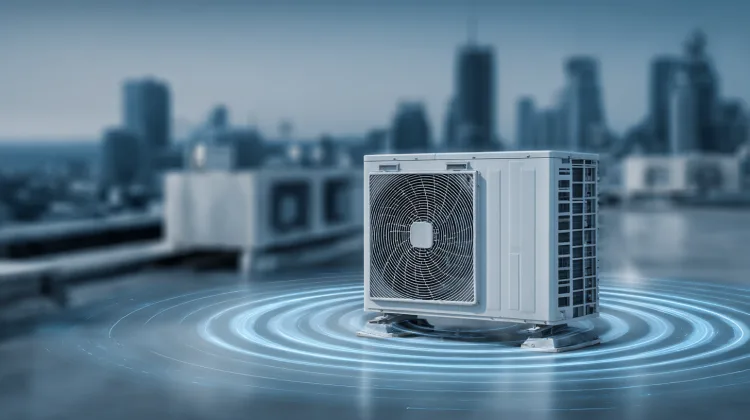
Rooftop condenser with stylized sound waves

WHAT HVAC SOUNDPROOFING COVERS

Put simply, the job is to cut system noise along both of its routes into a room — airborne and structure-borne.

Airborne noise travels with the air: the whoosh at a ceiling diffuser, the hiss at a return grille. The fix is acoustic liner inside the ducts, extra mass on the duct skin, and silencers or baffles along the way.

Structure-borne noise begins as shaking. A compressor or fan vibrates, the frame of the building conducts it, and elsewhere a wall, floor or ceiling turns it into sound. Springs, pads and isolation hangers break that chain before it starts.

In practice, most problems mix the two. That's why half-measures disappoint: line the ducts but leave a vibrating unit bolted to the slab, and the room barely changes.
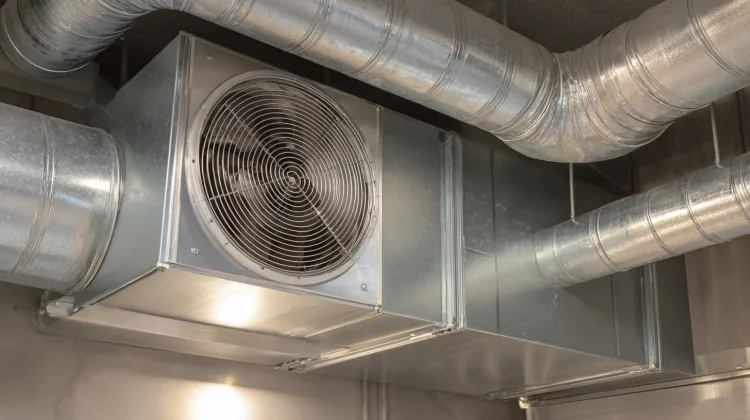
Indoor air handler unit connected to sheet-metal ductwork

WHERE HVAC NOISE COMES FROM

HVAC noise comes from specific components, not the system as a whole, and naming the right one points to the fix. The main offenders:

The condenser or compressor — usually outside — throws off low-frequency hum and mechanical clatter, both through the air and into its mounting surface. Picture a balcony mini-split, or a side-yard condenser a few feet from a neighbor's bedroom window.

The blower inside the air handler makes noise right where air enters the system. From there it slips into the ductwork and rides along to every register on that run.

Ductwork is the highway. Air movement, turbulence where ducts bend and sound conducted along the sheet metal deliver noise to rooms far from the equipment, and rigidly connected ducts pass vibration along too.

Structure-borne vibration shows up when equipment is bolted straight to a slab, floor or framing. It travels through the building and resurfaces as sound in other rooms — sometimes in a neighbor's unit.

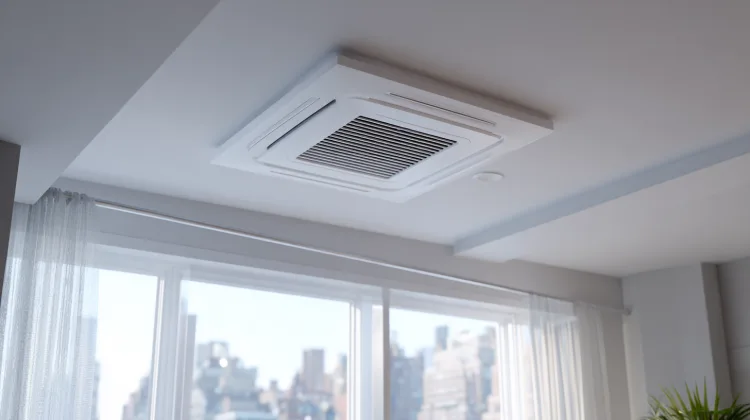
Ceiling vent in a quiet, modern Santa Monica apartment

HVAC SOUNDPROOFING SERVICES WE OFFER

Proper HVAC noise control has three targets: what travels through the air, what travels through the structure, and the room the equipment lives in. Each service below works alone or as part of one complete treatment.

Acoustic Duct Lining & Ductwork Soundproofing

Ducts carry most HVAC noise into the rooms people use. Inside, we fit acoustic duct liner that absorbs the sound before it reaches a register. Where the sheet metal is thin, we stiffen and weight it. And we add lined elbows and baffles, since each lined right-angle bend strips away part of the noise.

Isolating HVAC Equipment Vibration

Isolation keeps equipment vibration from ever entering the building. We set units on spring isolators or neoprene pads, or hang them from isolation hangers, so the machine is decoupled from slabs and framing instead of shaking them. It's the step boxed DIY kits almost always skip.

Soundproofing Mechanical & Equipment Rooms

A mechanical room gathers the loudest gear in one place, and the noise leaks next door — into an office, an edit suite or a ground-floor apartment. We treat walls, ceiling, door and duct penetrations to contain it at the source.

Condenser & Outdoor Unit Noise Control

Outdoor condensers send noise toward windows and the lot next door — and on tight Westside lots, neighbors often sleep with windows open to the ocean air. Barrier walls, ventilated enclosures and mass-loaded materials block it without choking the unit's airflow.

Technician in uniform beneath overhead ductwork

WHY PICK OUR SANTA MONICA HVAC SOUNDPROOFING TEAM

The difference in our HVAC work is simple: we handle the airborne and structure-borne paths together, so the room actually gets quieter instead of just looking good in a spec sheet. Here's how that plays out on a real job.

Certified Technicians, 10+ Years in Mechanical Noise

A decade-plus of mechanical and HVAC noise jobs has taught our technicians to diagnose first. Before anything gets installed, they confirm where the sound really originates — so you never pay to line ducts when the real offender is a compressor shaking the slab.

Airborne & Structure-Borne Noise in One Plan

Air and vibration paths get treated in a single project. That avoids the classic letdown — a freshly lined duct or a brand-new enclosure that still hums because nobody isolated the vibration running through the building.

Trusted by Major Brands in Tech & Entertainment

Sony, Microsoft, Uber, Warner Bros. and YouTube have all brought us in for acoustic work. Teams like these can't afford mechanical noise that distracts people or interrupts operations — and we deliver accordingly.

On-Site Visits & Virtual Consultations

Free on-site assessments cover Santa Monica and the wider LA area, from Brentwood to Pasadena. Everywhere else, we consult by video, and our soundproofing products ship nationwide so remote projects can follow the same plan.

Technician checking duct noise with a handheld sound meter

HOW OUR HVAC SOUNDPROOFING PROCESS WORKS

Measurement comes first. Once we know what's making the noise and how it travels, each treatment goes after the actual problem rather than a generic guess.

Step 1: Measure the Noise & Find the Source

A site visit or video walkthrough comes first. Readings tell us if we're facing airborne noise, structure-borne noise or a mix, and which component makes it. That decides the treatment list.

Step 2: Written Proposal & Custom Plan

Next, a written proposal lists the duct work, isolation, room treatment or outdoor measures, with materials, the results to expect and budget. You review all of it before a single tool comes out.

Step 3: Install Lining, Isolators & Enclosures

Our crew fits the duct liner, isolators, mechanical room upgrades and outdoor enclosures per the spec, without starving the system of airflow. Work is scheduled around your day to keep disruption low.

Step 4: Verification Testing & Follow-Up

Afterward, we measure again at the original spots and compare the numbers so the improvement is documented, not assumed. Follow-up support and ongoing maintenance are available whenever you need them.

Homeowner and HVAC contractor chatting beside an outdoor condenser

GET YOUR HVAC SOUNDPROOFING ASSESSMENT STARTED

Book a free HVAC noise assessment and get a written plan that targets airflow noise and vibration alike. Our team covers Santa Monica, the Westside and Greater Los Angeles — and ships soundproofing products anywhere in the country.

📞 Call Today — (877) 999-2201 | Get a Free Quote

Frequently Asked Questions

What does HVAC soundproofing cost?

Your price hinges on the source of the noise, how much ductwork needs treatment, whether the job calls for isolation or a mechanical room upgrade, and the materials chosen. After the assessment, you receive a written proposal with a precise number.

Is HVAC noise airborne, structure-borne, or both?

Usually it's both. Air noise and sound carried inside the ducts are airborne. Vibration traveling from the equipment through the building frame is structure-borne. Since lasting quiet means addressing both, we always diagnose before we prescribe.

How do you quiet an outdoor AC or condenser?

Barrier walls, ventilated enclosures and mass-loaded materials go where they stop the airborne sound while keeping the airflow and service clearance the unit requires. If it sits on a roof deck or balcony that carries its hum into the building, we add vibration isolation.

Can HVAC equipment be soundproofed without cutting its airflow?

Yes. Ventilated enclosures, vibration isolators, lined baffles and acoustic duct liner all lower the noise while leaving the airflow and clearance the system needs. Starving a unit of air hurts performance, so we pick treatments that never do.

Why can I feel my HVAC vibrating through walls or floors?

You're dealing with structure-borne noise. When equipment is bolted straight to the building, vibration runs through joists, studs and slabs and comes back out as sound in rooms you'd never expect. Springs, neoprene pads or isolation hangers under the unit stop it; duct treatment won't.

What's the best way to quiet noisy ductwork?

Line the duct interior with acoustic liner to absorb sound on the move, add mass to thin sheet-metal walls, and route air through lined 90-degree elbows or a baffle box. Each lined right-angle turn trims the noise that gets through while air keeps flowing freely.

Santa Monica Soundproofing

Your Santa Monica & Greater LA Acoustics Team

We design sound environments around the people who use them, whether that means a recording studio, a music room, a home office, a boardroom set up for video meetings, a busy workplace, a restaurant, a club, a place of worship or a school auditorium.

View All Services

Request a consultation

Share a few details and our team will reach out

Let’s begin with the basics:

Prefer the phone? (877) 999-2201

Additional info (Optional)